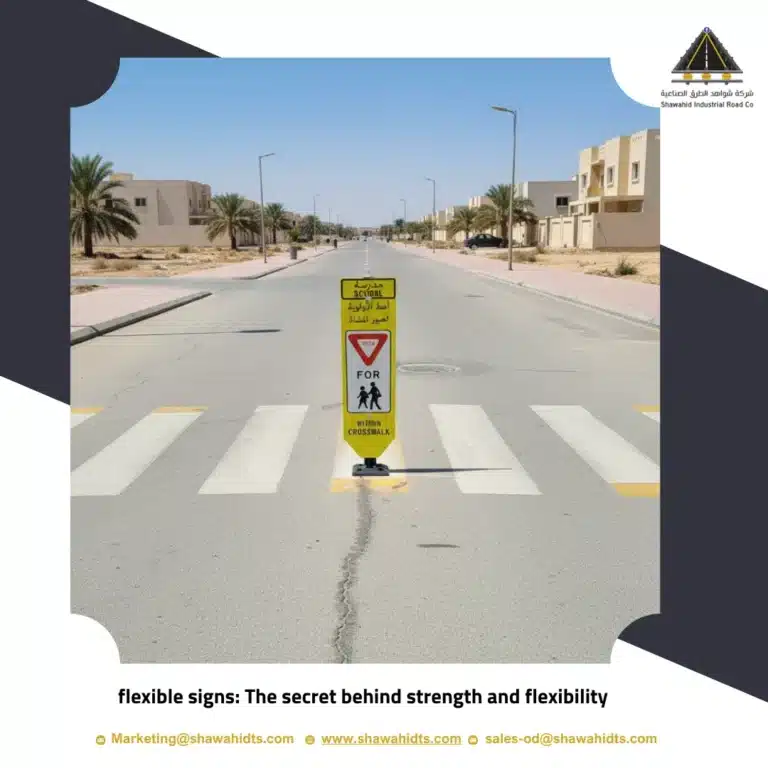
Flexible signs represent a new generation of guidance and warning systems, specifically engineered to adapt to harsh environments characterized by extreme heat, strong winds, and repeated impacts without compromising their primary function. With the continuous expansion of road networks and the increasing reliance on intelligent traffic safety solutions, the focus is no longer limited to the visual clarity of traffic signs alone. Today, equal importance is placed on their ability to remain functional and reliable under the most demanding operational conditions.
Harsh Environments: The Real Challenge for Flexible Signs
Flexible signs installed on highways and open-road networks are constantly exposed to conditions that directly affect their service life. High temperatures can cause conventional materials to crack or deform, while strong winds may bend or topple rigid signs. In addition, vehicle impacts caused by lane deviation or reduced visibility pose a serious threat to traditional signage.
Under such conditions, conventional rigid signs often become weak points within the road safety system. Instead of serving as guidance tools, they may turn into solid obstacles that increase accident severity. This challenge has driven the need for traffic signs that can adapt rather than resist through rigidity.
The Concept of Flexibility in Flexible Sign Design
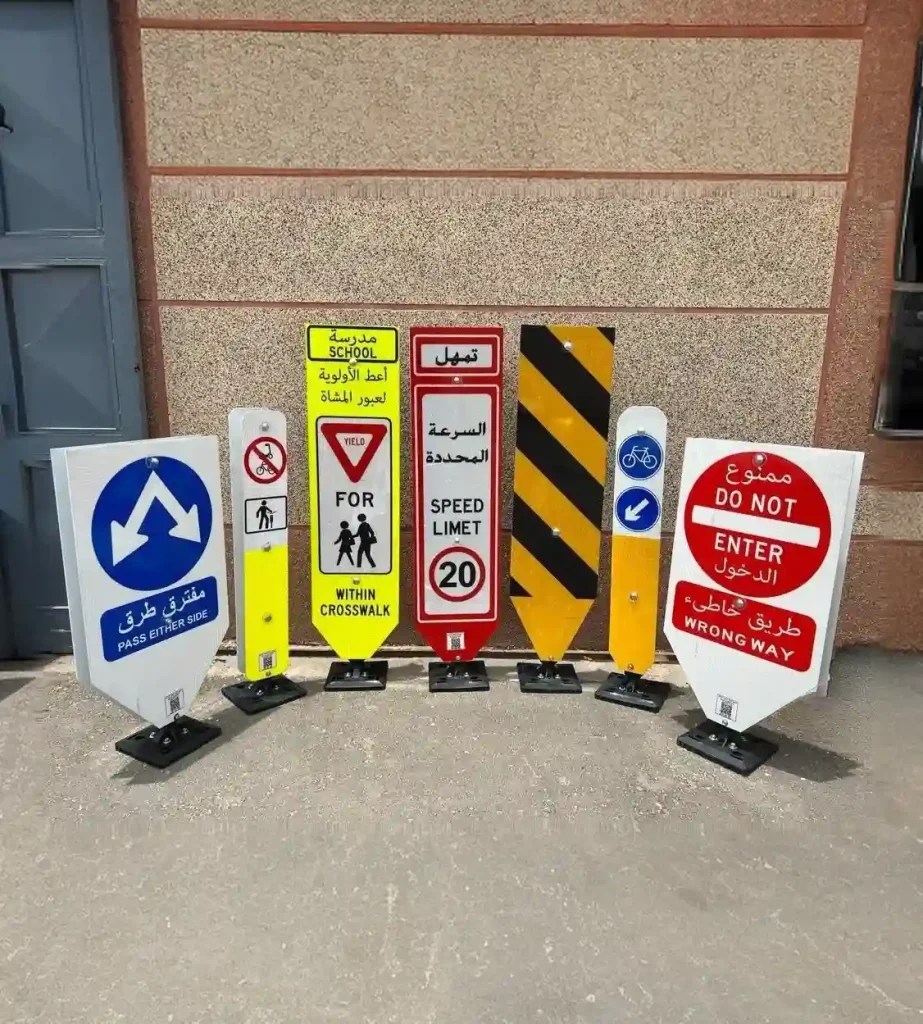
Flexibility in traffic signs goes beyond simple bending. It refers to the ability to absorb impact energy, withstand environmental stress, and return to the original position without losing shape, visibility, or function. This performance is achieved through advanced engineering materials that combine strength with elasticity, allowing the sign to respond intelligently to external forces.
When a flexible sign is exposed to strong winds or sudden impact, it does not break or collapse. Instead, it bends at a controlled angle and then recovers its original position, maintaining both structural integrity and clear traffic messaging.

How Flexible Signs Respond to Vehicle Impacts
In the event of a vehicle collision, flexible signs do not behave as rigid obstacles that abruptly stop the vehicle. Instead, they absorb and dissipate impact energy. This energy absorption prevents the sign from breaking and reduces the severity of damage to the vehicle and its occupants. It also eliminates the risk of broken sign components becoming hazardous debris on the roadway.
This approach reflects a fundamental shift in road safety philosophy—from resisting impact to managing it intelligently to minimize damage and protect lives.
Resistance to Extreme Climatic Conditions
One of the most significant advantages of flexible traffic signs is their ability to perform reliably under harsh climatic conditions. The materials used in their construction are resistant to ultraviolet radiation, preventing color fading and material degradation over time. They are also capable of withstanding wide temperature fluctuations without cracking or losing mechanical properties.
These characteristics make flexible signs particularly suitable for desert highways, coastal roads, and open high-speed routes, where traditional signage often deteriorates more quickly.

Visual Clarity and Long-Term Performance
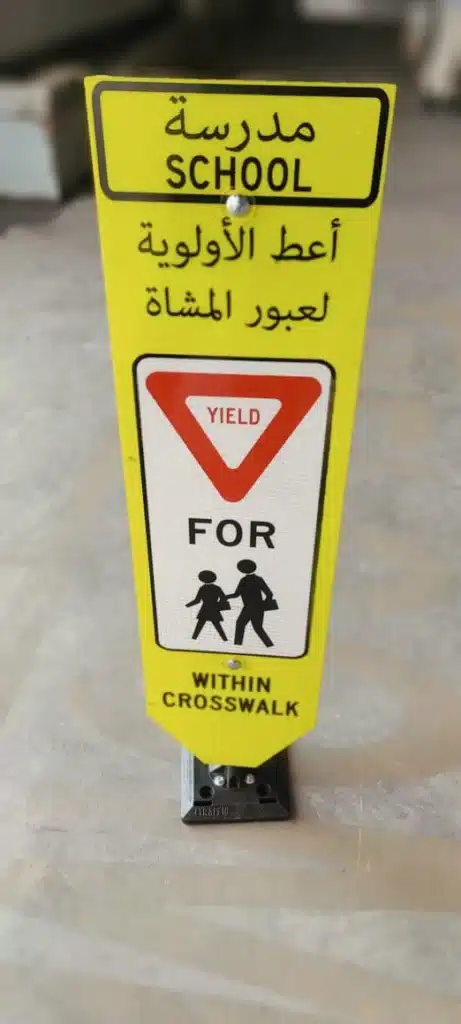
In addition to durability and flexibility, flexible traffic signs maintain high levels of visual clarity. They are typically integrated with premium reflective sheeting that ensures excellent visibility at night and in low-light conditions. Because the sign remains upright and undistorted, the traffic message stays clear and legible over extended periods.
This consistency in performance reduces the need for frequent maintenance and ensures uninterrupted guidance and warning for road users.
Long-Term Cost Efficiency of Flexible Signs
From a long-term perspective, flexible traffic signs significantly reduce operational and maintenance costs. Rather than requiring repeated replacement after impacts or environmental damage, flexible signs continue to perform effectively even after multiple stress events. Furthermore, by reducing accident severity, they indirectly lower infrastructure repair costs and associated downtime.
As a result, flexible signs evolve from being simple guidance elements into long-term investments in road safety and infrastructure efficiency.
Flexible Signs as Part of a Safety System
Flexible traffic signs do not function in isolation. They are designed to integrate seamlessly with other road safety components such as barriers, reflective road markings, and intelligent warning systems. When properly incorporated into the overall road design, they contribute to creating a safer, more adaptive traffic environment capable of handling diverse operational scenarios.

Our Role in Advancing
Flexible Traffic Sign Solutions
Based on a deep understanding of modern roadway challenges, Shawahid Traffic Systems provides flexible traffic signs specifically engineered to withstand the most extreme operational conditions across the Kingdom. The company focuses on selecting high-quality materials and applying precise engineering design to deliver signage solutions that combine flexibility, visibility, and extended service life.
Shawahid’s role extends beyond supply alone. The company offers integrated solutions that begin with site assessment, continue through system selection, and conclude with technical support, ensuring the highest levels of traffic safety and long-term project sustainability.
Marketing@shawahidts.com sales-od@shawahidts.com
Contact Numbers: +966 590 177 041, +966 54 105 1247
WhatsApp: +966581115596